
Leishmaniasis
Leishmaniasis: Causes, Symptoms, Types, Treatment and Prevention
Introduction
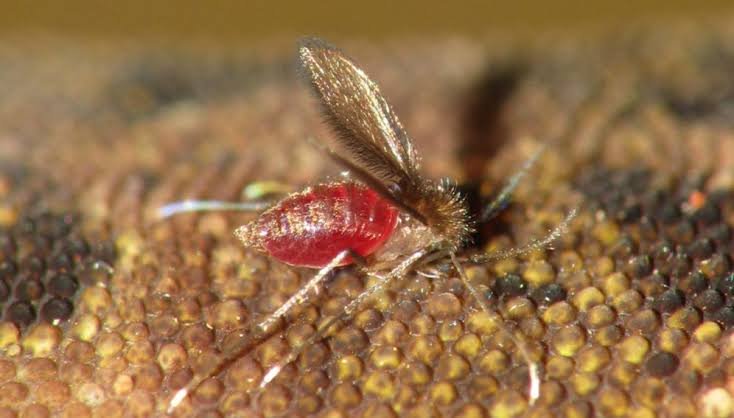
Leishmaniasis is a parasitic infectious disease caused by microscopic organisms belonging to the genus Leishmania. It is transmitted to humans through the bite of an infected female sand fly.
The disease mainly affects the skin, mucous membranes, and internal organs, depending on the type of infection. Some forms cause skin ulcers, while the most severe form can affect organs such as the spleen, liver, and bone marrow.
Leishmaniasis is an important public health concern in several tropical and subtropical regions, including parts of India. Early diagnosis, appropriate treatment, and effective vector control are essential to prevent complications.
What Is Leishmaniasis?
Leishmaniasis is a vector-borne parasitic disease. A vector is an organism that carries and transmits an infectious agent from one host to another.
The parasite responsible for the disease is called Leishmania. It can survive and multiply inside certain immune cells called macrophages.
The disease is not usually spread through casual contact, such as touching, hugging, or sharing food with an infected person. Its primary route of transmission is the bite of an infected female sand fly.
Causes of Leishmaniasis
The main cause of leishmaniasis is infection with the Leishmania parasite.
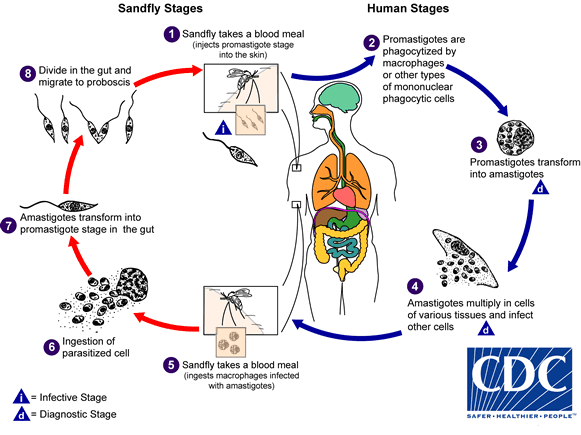
The infection generally occurs through the following steps:
An uninfected female sand fly bites an infected human or animal and ingests parasites.
The parasites develop inside the sand fly.
The infected sand fly bites another person and introduces the parasites into the skin.
The parasites enter immune cells and multiply, leading to infection.
Different Leishmania species can cause different forms of the disease.
How Is Leishmaniasis Transmitted?
The principal route of transmission is the bite of an infected female sand fly.
Important facts about transmission include:
Sand flies are small insects that may be difficult to notice.
They are often active from dusk to dawn, although activity varies by species and environment.
Infected sand flies can transmit the parasite during a bite.
In some regions, animals such as dogs act as reservoirs for particular Leishmania species.
Rare alternative routes, including transmission through contaminated blood or shared needles, have been documented.
Leishmaniasis is not generally transmitted directly from one person to another through ordinary social contact.
Types of Leishmaniasis
Leishmaniasis is commonly classified into three major clinical forms.
1. Cutaneous Leishmaniasis
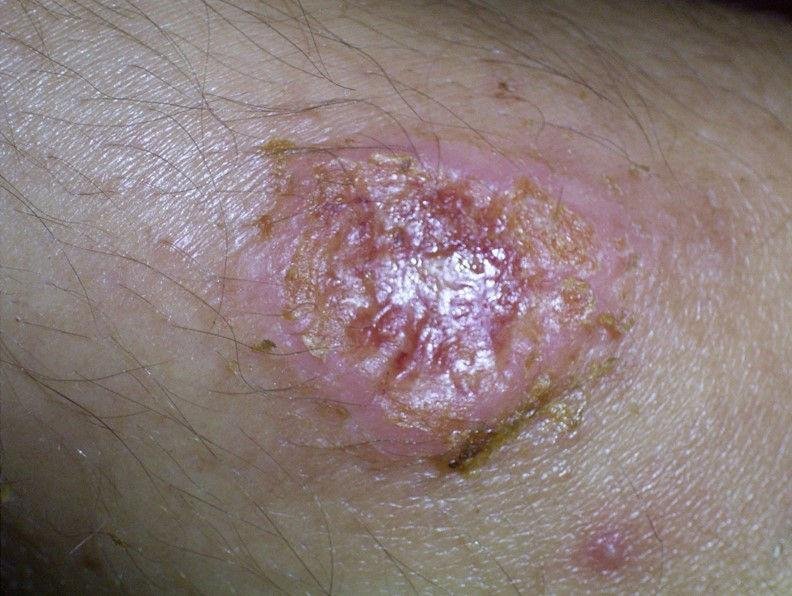
Cutaneous leishmaniasis is the most common form worldwide. It primarily affects the skin.
Common symptoms:
Small bumps or nodules on the skin.
Painless or sometimes painful skin ulcers.
Raised edges around sores.
Lesions that heal slowly and may leave permanent scars.
The lesions commonly develop on exposed areas, such as the face, arms, and legs. Their appearance can resemble other skin conditions, so medical evaluation is important.
2. Mucosal or Mucocutaneous Leishmaniasis
This form affects the mucous membranes of the nose, mouth, or throat. It can develop after a skin infection, sometimes months or years later, depending on the parasite species.
Possible symptoms:
Persistent nasal blockage.
Nosebleeds.
Sores inside the nose or mouth.
Damage to tissues of the nose, mouth, or throat in advanced cases.
This form requires prompt specialist assessment because progressive tissue damage can occur.
3. Visceral Leishmaniasis (Kala-azar)
Visceral leishmaniasis is the most severe form because it affects internal organs, particularly the spleen, liver, and bone marrow.
In India, it is commonly known as kala-azar.
Common symptoms:
Prolonged or irregular fever.
Weight loss.
Weakness and fatigue.
Enlargement of the spleen and sometimes the liver.
Anemia and other blood abnormalities.
Reduced appetite.
In severe untreated cases, visceral leishmaniasis can be fatal. Early diagnosis and effective treatment are essential.
Symptoms of Leishmaniasis
Symptoms vary according to the type of disease, the parasite species, and the person’s immune status.
The following table summarizes the main differences:
| Type | Main affected area | Common features |
|---|---|---|
| Cutaneous | Skin | Bumps, sores, ulcers, scarring |
| Mucosal | Nose, mouth, throat | Nasal blockage, bleeding, tissue damage |
| Visceral | Internal organs | Fever, weight loss, enlarged spleen, anemia |
Symptoms may not appear immediately after infection. The incubation period can range from weeks to months and, in some cases, longer.
Leishmaniasis in India
Visceral leishmaniasis, or kala-azar, has historically been an important public health problem in parts of eastern India, particularly Bihar, Jharkhand, Uttar Pradesh, and West Bengal.
The disease is associated with the parasite Leishmania donovani and is transmitted mainly by infected sand flies. Human infection is an important part of the transmission cycle in the Indian subcontinent.
Public health measures include early case detection, treatment, surveillance, and sand-fly control. The number of cases and the areas affected can change over time, so current local health information should be consulted when discussing the latest disease situation.
Diagnosis of Leishmaniasis
Diagnosis depends on the clinical presentation, travel or residence history, and appropriate laboratory investigations.
Common diagnostic methods include:
1. Clinical examination: A healthcare professional examines skin lesions or assesses symptoms such as prolonged fever and an enlarged spleen.
2. Microscopic examination: Samples from skin lesions, bone marrow, or other appropriate tissues may be examined for parasites.
3. Molecular testing: Polymerase chain reaction (PCR) can detect Leishmania genetic material in suitable samples.
4. Serological tests: Antibody-based tests, including rK39 rapid tests, may help diagnose visceral leishmaniasis in appropriate clinical settings. These tests must be interpreted alongside symptoms and other findings.
No single test is suitable for every form of leishmaniasis. The choice of investigation depends on the suspected type of infection and local diagnostic guidelines.
Treatment of Leishmaniasis
Treatment depends on the clinical form, parasite species, geographic location, severity of infection, and the patient’s general health.
Common treatment options include:
Visceral leishmaniasis: Liposomal amphotericin B is an important treatment option in many settings. Other medicines, including miltefosine or paromomycin, may be used in selected circumstances according to local guidelines.
Cutaneous leishmaniasis: Some localized lesions may be managed with local treatments, while other cases require systemic medicines.
Mucosal leishmaniasis: Systemic treatment and specialist follow-up are generally required.
The appropriate medicine, dose, and duration must be determined by a qualified healthcare professional. Treatment should not be started without medical assessment because medicines differ in their effectiveness, risks, and suitability.
Important: Untreated visceral leishmaniasis can be life-threatening. Anyone with prolonged fever, unexplained weight loss, or suspected enlargement of the spleen should seek prompt medical evaluation, particularly if they live in or have travelled to an affected area.
Prevention of Leishmaniasis
There is currently no widely available vaccine for routine prevention of human leishmaniasis. Reducing sand-fly bites and controlling the vector are important preventive measures.
Practical prevention tips
Use insect repellents: Apply an appropriate registered repellent according to its label instructions.
Wear protective clothing: Long sleeves, long trousers, and socks can reduce exposed skin.
Use insecticide-treated nets: Fine-mesh, insecticide-treated nets may help because sand flies are smaller than mosquitoes.
Improve sleeping protection: Use screened rooms and follow local public health advice.
Support vector control: Insecticide spraying and environmental measures may be recommended by public health authorities.
Seek early medical care: Early recognition and treatment can reduce complications and support disease-control efforts.
Because sand flies are small, ordinary mosquito nets may not always provide sufficient protection unless the mesh is appropriately fine.
Possible Complications
Complications depend on the type of leishmaniasis.
Permanent skin scars following cutaneous infection.
Damage to the nose, mouth, or throat in mucosal disease.
Severe anemia and other blood abnormalities in visceral disease.
Secondary infections of skin lesions.
Life-threatening illness in untreated visceral leishmaniasis.
People with weakened immune systems may experience more severe disease or relapse and may require closer medical monitoring.
When Should You Consult a Doctor?
Consult a healthcare professional if you notice:
A persistent skin sore that does not heal, particularly after exposure in an affected area.
Prolonged unexplained fever.
Unexplained weight loss or persistent weakness.
Persistent nasal or oral lesions after possible exposure.
Fever accompanied by abdominal swelling or other signs of serious illness.
These symptoms can have many causes and do not necessarily mean leishmaniasis. Medical assessment is needed to establish the diagnosis.
Frequently Asked Questions (FAQs)
1. Is leishmaniasis caused by bacteria or a virus?
No. Leishmaniasis is caused by a protozoan parasite belonging to the genus Leishmania.
2. Which insect spreads leishmaniasis?
It is mainly transmitted by the bite of an infected female phlebotomine sand fly.
3. Is leishmaniasis contagious?
It is not generally spread through ordinary person-to-person contact. The main route is an infected sand-fly bite, although rare alternative transmission routes have been reported.
4. What is kala-azar?
Kala-azar is another name for visceral leishmaniasis, a serious form of the disease that affects internal organs.
5. Can leishmaniasis be cured?
Yes. Many cases can be successfully treated, but the treatment depends on the form of disease, parasite species, and individual circumstances. Some cases can relapse or leave permanent scars.
6. How can leishmaniasis be prevented?
Avoiding sand-fly bites, using appropriate repellents and protective clothing, sleeping under suitable insecticide-treated nets, and supporting vector-control programs can reduce risk.
7. Is leishmaniasis found in India?
Yes. India has historically reported visceral leishmaniasis, particularly in parts of the eastern region. Current distribution and case numbers should be checked using official public health sources.
Conclusion
Leishmaniasis is a parasitic disease that can affect the skin, mucous membranes, and internal organs. Its severity ranges from localized skin ulcers to life-threatening visceral infection. Understanding how the disease spreads, recognizing its symptoms, obtaining timely diagnosis, and following appropriate treatment are essential for reducing complications. Personal protection against sand-fly bites and public health vector-control measures remain important parts of prevention.
Medical disclaimer: This article is intended for educational purposes only. It does not replace professional medical advice, diagnosis, or treatment. Consult a qualified healthcare professional for individual medical concerns.